3 1 Further Notes and Views: Difference between revisions
From Knot Atlas
Jump to navigationJump to search
No edit summary |
No edit summary |
||
| Line 94: | Line 94: | ||
}} |
}} |
||
|} |
|} |
||
===Non-prime (compound) versions=== |
|||
<gallery> |
|||
Image:Square-knot-6-crossings.png|Two trefoils (single-closed loop version of the "square knot" of practical knot-tying) |
|||
Image:Granny-knot-6-crossings.png|Two trefoils (single-closed loop version of the "granny knot" of practical knot-tying). |
|||
Image:3trefoil-9crossings.gif|Three trefoils (symmetrical). |
|||
Image:Celtic-knot-insquare-green-transparentbg.png|Four trefoils (Celtic or pseudo-Celtic decorative knot which fits in square) |
|||
</gallery> |
|||
</div></div> |
</div></div> |
||
<br clear=left> |
<br clear=left> |
||
Revision as of 16:21, 3 March 2010
The trefoil is perhaps the easiest knot to find in "nature", and is topologically equivalent to the interlaced form of the common Christian and pagan "triquetra" symbol [12]:
 Logo of Caixa Geral de Depositos, Lisboa [1] |
 A knot consists of two harts in Kolam [2] |
 Thurston's Trefoil - Figure Eight Trick [3] |

Further images...
 A Knotted Box [4] |
 A trefoil near the Hollander York Gallery [5] |
 A Knotted Pencil [6] |
 The NeverEnding Story is a connected sum of two trefoils. [7] |
 Banco Do Brasil [8] |
 A hagfish tying itself in a knot to escape capture. [9] |
 A Kenyan Stone [10] | |
 Mike Hutchings' Rope Trick [11] |


Non-prime (compound) versions
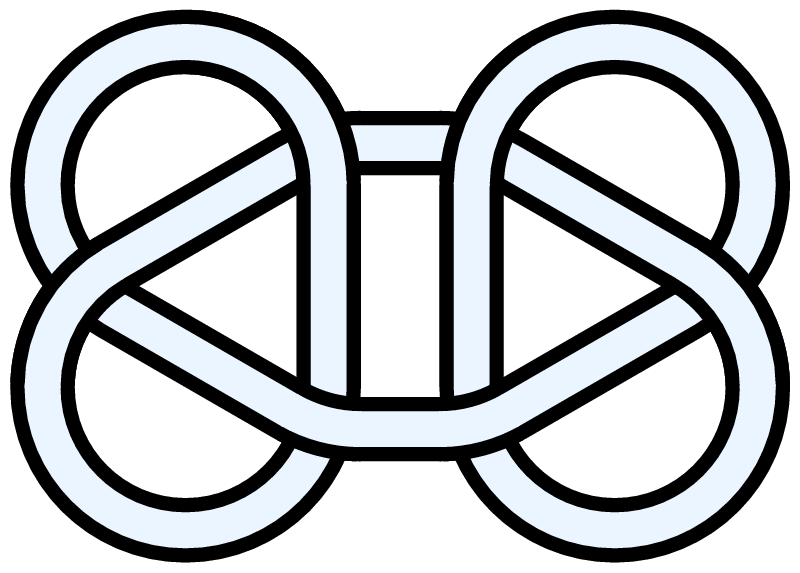
Two trefoils (single-closed loop version of the "square knot" of practical knot-tying)
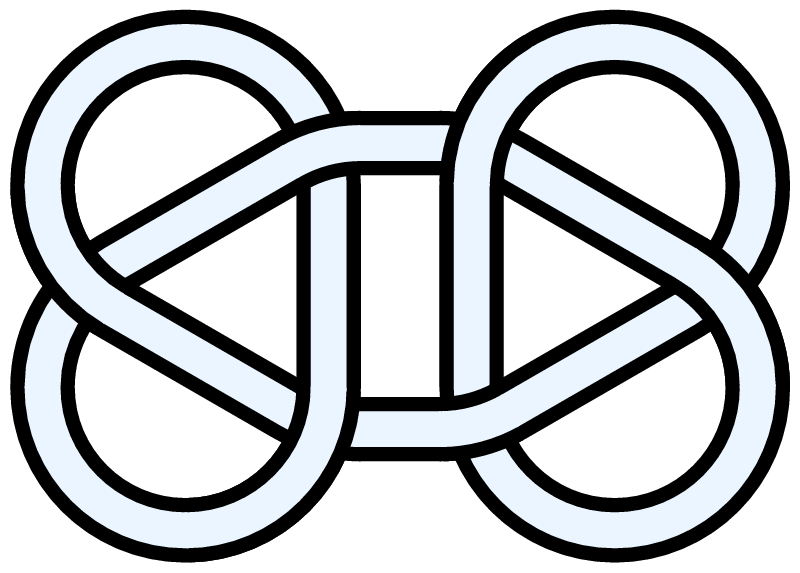
Two trefoils (single-closed loop version of the "granny knot" of practical knot-tying).
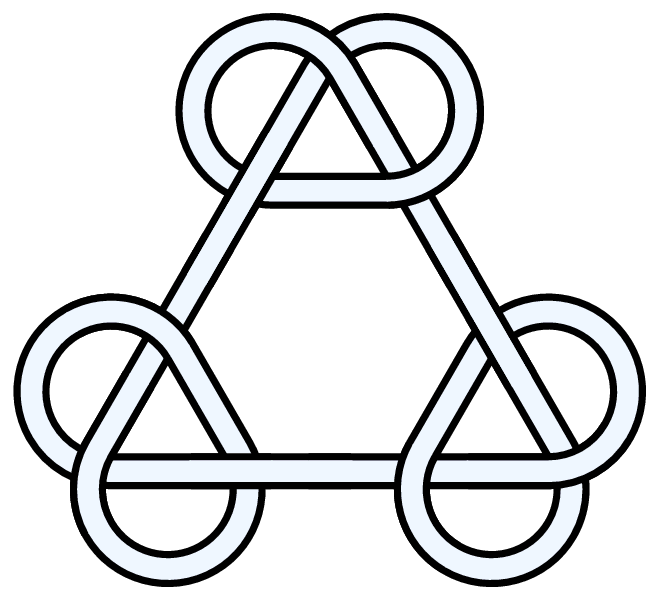
Three trefoils (symmetrical).
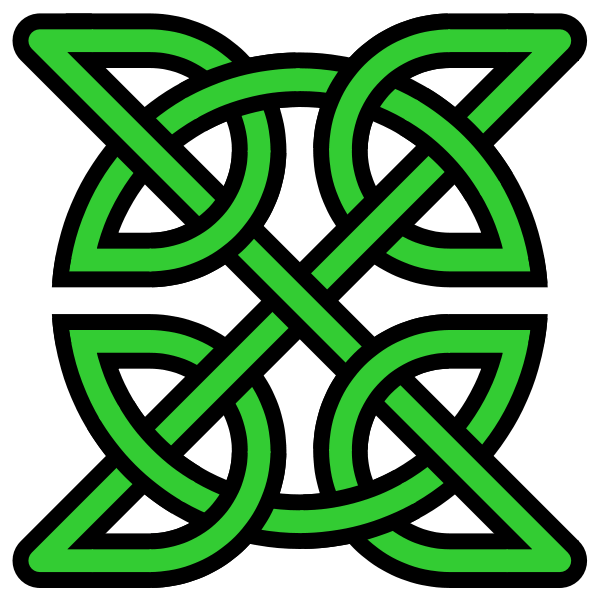
Four trefoils (Celtic or pseudo-Celtic decorative knot which fits in square)


